20 Great Tips For Picking Anti-Termite Services In Jakarta
Wiki Article
Jakarta Homes: Subterranean Termite Defense
Walk through any Jakarta neighborhood--Menteng, Kebayoran Baru, Kelapa Gading--and you will see them: door frames swollen at the base, fine brown lines climbing foundation walls, tiny pinprick holes in skirting boards. A majority of homeowners believe that this is normal wear and wear and tear. This isn't. It's evidence of a subterranean termite-infested roost that has been able to get into the structure. It feeds all day, every day of the week due to Jakarta's unrelenting humidity and advanced construction methods. For a Jakarta-based home, the best way to protect it is to eschew all of the imported pest control guides, instead, use methods that are calibrated specifically for its species, soils and the climate.
1. The Window and Door Frame Epidemic
Jakarta termites do not break through concrete slabs. They enter at the top of the person's height at the point where concrete meets wood. Window sills, door jambs and the wooden frames embedded in brick walls are responsible for around 50% of all reported attacks. Anti-termite services that are delivered with drills and injection rods aimed at the floor slab are fighting the wrong war. The real fight is at waist level, where moisture condenses onto glass and seeps into untreated wood.
2. Four Species, One City, Different Rules
Jakarta is home to four distinct species of subterranean insect However, they do not behave in the same way. Coptotermes gestroi is the most aggressive structural invader. Microtermes insperatus, despite being the dominant species numerically, is less destructive. Macrotermes gilvus builds visible mounds in gardens. Coptotermes curvignathus prefers live trees, but they can move into houses when wood runs out. Exterminators who cannot discern the distinction between the two species are unable to select the right bait.
3. The Six-Week Truth
There is no legitimate way to eliminate colony overnight. It can take up to eight weeks for the poison chlorfluazuron to move through the colony. Pest control companies who advertise 24 hour eradication employ contact poisons to kill only the foragers. The reproductive nucleus remains unaffected.
4. Above-Ground stations are the future of everything.
Although perimeter bait stations are helpful for monitoring, they do not work against active infestations that have already entered the structure. Above-ground stations - small bait cartridges that are locked directly onto mud tubes - force toxicants into the colony's highway. Jakarta exterminators aren't selling treatment if they don't own above-ground units.
5. The Soil Moisture Trap
Jakarta's silty soils are able to hold water. Termites aren't content when soil moisture exceeds 22 percent, they actually prefer them. Anti-termite companies that spray chemicals without first checking drainage, downspout discharge and overspray from irrigation are putting toxic chemicals to an environment that termites consider to be hospitable.
6. Pine Stake Forensics
Before they recommend treatment for the pest exterminators recommend that stakes of Pinusmerkusii be placed all around the perimeter. Thirty-days later they remove and weigh the stakes. A weight loss of more than 30% confirms that the pressure to forage is high and calls for intervention. This isn't a speculation. It is calibrated and available to any qualified service provider.
7. Green Belt Hazard
Nine Jakarta sub-districts carry extreme termite risk: Penjaringan, Pademangan, Palmerah, Kebayoran Baru, Jagakarsa, Pesanggrahan, Kramatjati, Duren Sawit, and Cipayung. These areas share one characteristic--significant remaining green space that sustains parent colonies. In this zone, homes require regular inspections every quarter, as well as constant baiting. Annual contracts aren't sufficient.
8. It is not safe to construct a new house
Termites adapt to urban development. They nest in fill soil that is imported to construct new housing estates. They forage through utilities ditches and occupy the landscaping for irrigation that developers install. The recently constructed home in BSD or Bekasi it isn't an empty canvas, but a termite colony that was ready to go into business from the moment the first plant was planted.
9. Short-Rotation Teak is Not the Teak of your Grandfather
The termites are deterred by silica and the oils that are present in traditional Javanese teak tree. Modern plantation harvested teak that is just 15 years old has silica and oils that deter termites. A large portion of the "teak" installed in Jakarta's contemporary housing is botanically identical but chemically immature. Termites adore the wood that homeowners pay a premium price for.
10. The Mud Tube Forensics Rule
Do not scrape or sand a dirt tub without first examining the contents. The tube origin point is the point of soil entry. The diameter correlates with the age of the colony. The place of the colony (bathroom, outside wall, or kitchen) determines what moisture source is feeding the colony. As with erasing the video footage without viewing it, damaging the tube is equivalent to destroying it without reading it.
You can also read our conclusion.
Jakarta's homes aren't being attacked by invaders. Residents have taken up residence in their homes, and have adapted to Jakarta's unique circumstances. The species is known to all. The pattern of attack is determined. Treatment times are tracked. One thing remains to be determined that homeowners, and the antitermite services that they hire, will abandon the myths surrounding pest control and implement methods that have been confirmed by the termites that live underground in Jakarta. There is scientific evidence. You must decide if you want to utilize it. Take a look at the recommended jasa basmi rayap for site info including rayap lemari, jasa pest control, pembasmi rayap kayu, pest control jakarta selatan, pembasmi rayap, pest control jakarta selatan, pest control jakarta selatan, pembasmi hama, pembasmi rayap, rumah rayap and more.
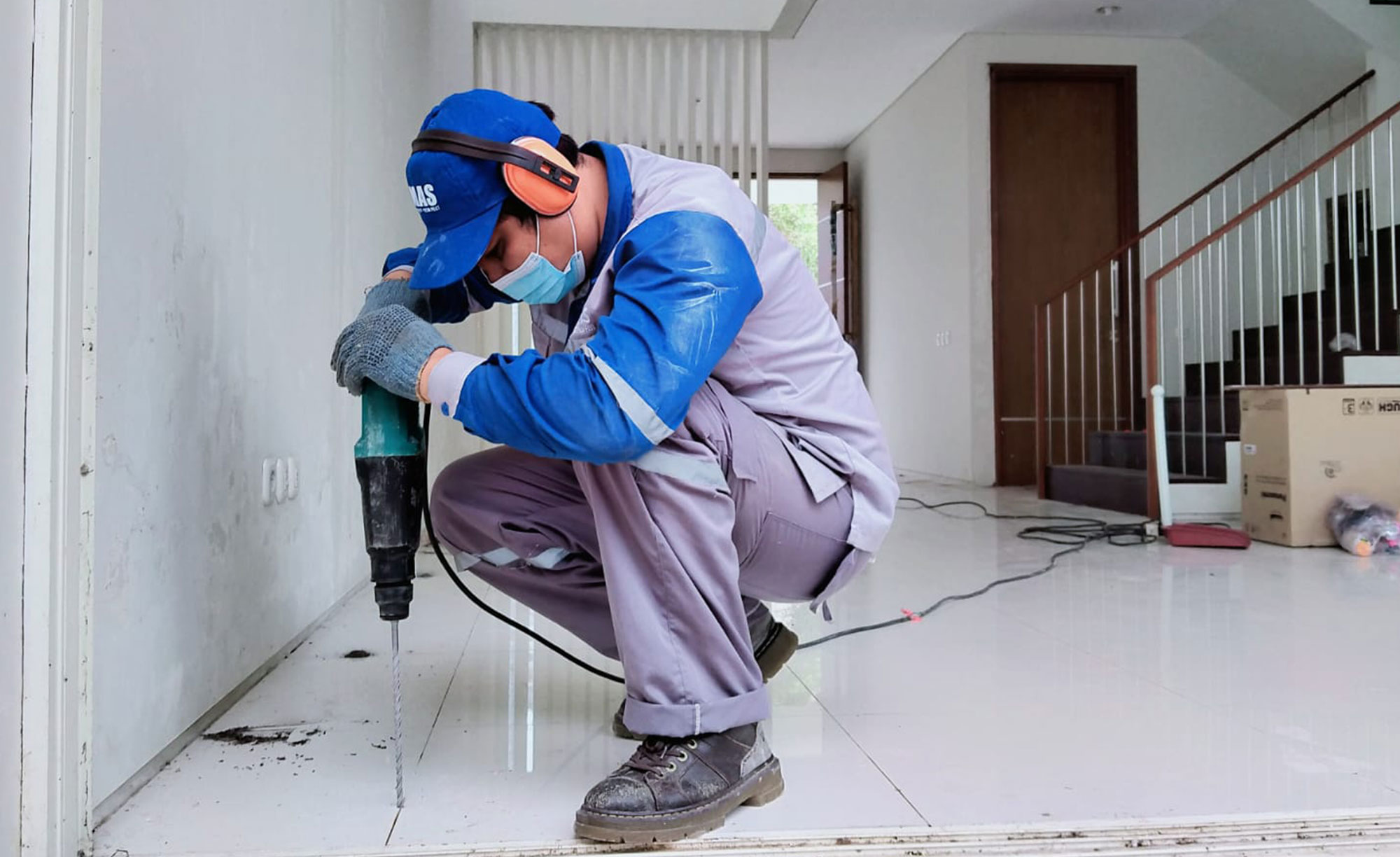
There Are Soil Treatment Protocols For Termites In Greater Jakarta
The trench is dug. The rod will be put in. The chemical is injectable. The technician moves 60 centimeters, before repeating the process. This routine is practiced by exterminators and homeowners alike many times a year throughout Greater Jakarta. It's not. It is not. Soil treatment to control subterranean pests originated in temperate climes with soils of various textures, water conditions or species. The termites were transplanted to Jakarta's compacted silty clays, monsoon rainfall and Coptotermes gestroi foraging behavior The traditional trench-and-drench method produces results that range from transient suppression to total ineffectiveness. Greater Jakarta needs soil treatments protocols tailored specifically to Greater Jakarta conditions. The following 10 points will help identify chemical treatment that only generates bill lines from treatment which actually excludes termites.
1. The soil texture determines chemical Mobility
The Jakarta's urban soils are made up mainly of silty-clay that has been compacted. Particle size is tiny. Organic content is very low. Porosity is minimal. It is important to note that liquid termiticides aren't spread radially over this substrate as they would in loamy-sands. Instead, they build up in the trench, move in a preferred path, and pool in cracks. Pesticides are making themselves look foolish by assuming that they have a uniform distribution. Post-application verification requires soil core samples and not trust.
2. The 300-500mm moisture belt is used to determine placement
Roof eaves shield the soil surrounding the foundation wall. The soil receives very little rain. It remains dry than garden soil that is open. Termites feed on the soil belt 300-500 mm away from the structure. The space is close enough for termites to gain access to the foundation, but sufficiently far to get water. The soil treatments which are applied flush to the wall won't reach this belt. To achieve the best outcomes, the trench needs to be dug at the dripline and not the foundation.
3. Half-life of Hydrolysis is measured in Weeks, Not Months
Fipronil imidacloprid and bifenthrin can be degraded via hydrolysis. Temperature and moisture affect the speed of hydrolysis. Jakarta soil temperatures are 28-32degC on average in shallow depths. In the dry season, the moisture of soil is higher than 20%. Half-lifes of chemical products are impacted by this. A product labeled for twelve-month effectiveness in Ohio retains approximately four months of field efficacy in Bekasi. The warranty must reflect this. Most do not.
4. Vertical Barriers require horizontal destructive Action
Termites may enter the soil via the interface between the foundation. Only if the chemical agent is at the intersection will soil treatment be able to create an vertical barrier. Injecting rods from the surface creates chemical barriers at depth but leaves the uppermost 5 to 10 centimeters of the surface untreated unless the rods are withdrawn slowly while injecting. Exterminators that pound rods into the subsoil before pulling them up, immediately treat the subsoil, while leaving the topsoil untouched.
5. C-Organic Content Binds and Inactivates
The organic matter found in soil may adsorb pesticides that are not repellent and lower the amount of them and make it less attractive to termites. Jakarta's urban soils tend to be deficient in organic matter, but landscape planting beds near foundations typically receive compost and potting mixture. For soil treatment, higher rates are required for the breakdown of organic binders within these zones. Standard label rates are based on mineral soils that aren't modified.
6. Pre-treatment Moisture Audits Are Non-Negotiable
The soil water content is greater than 22%, which creates a preferred habitat. The soil's water content below 10% can reduce chemical pick-up and inhibits foraging. When exterminators inject terminicides without taking measurements of soil moisture and chemistry, they are operating in untested conditions. The cost of a moisture meter is around two hundred thousand rupiah. Ten times that amount is spent on the first re-treatment in case of improper application conditions are involved.
7. The volume of the trench must be equal to label rate, not a linear meter.
Indonesian soil-treatment estimates are generally priced according to the length of the foundation. Label instructions state concentration and volume in units of area or per linear foot at the specified dimensions of the trench. Exterminators who quote per meter without verifying trench depth and width are selling compliance documents but not treatment. The quantity of chemical required for a 15cm x 15cm trench is less than that required for a 30cm by 30cm trench. It's rare that the price difference reflects this.
8. Rodding Versus Trenching: A Selection of Species
Coptotermes gestroi grazes in the upper 15-20cm of soil. Microtermes insperatus gets access to moisture, even when it's dry, through vertical shafts. Rod injection deposits chemical at depth, intercepting Microtermes. Chemical deposits are mixed and trench throughout the upper profile and intercepting Coptotermes. Species identification must precede protocol selection. Pest control companies that treat soil identically for all accounts are not matching the diversity of species in Jakarta at least half of the time.
9. Re-treatment Intervals Are Shorter Than Marketing Claims
The Indonesian pest control market is competitive. To promote their products, warranty periods have been overinflated. Most often, warranties are for three years for soil treatment. In Jakarta conditions, field real-world scenario allows for 12-18 months of complete exclusion followed by the depletion of chemical. The fact that homeowners experience termite infestations in the month twenty-two isn't an unusual; they are following the schedule. Pest control companies that accept warranties without rethinking the coverage after month twenty keep clients. The ones who dispute coverage lose their clients.
10. The best way to ensure the quality of soil is to test it after treatment.
The exterminator claims the trench had been constructed to the proper depth, and the chemical was mixed at the correct concentration. The exterminator also asserts that the that the chemical was injected at the right pressure. The homeowner is not provided with any way to verify. Verification can be done by analyzing soil cores to find active components. This service is available. It's cost-effective. Jakarta anti-termite service providers who provide the results of soil samples taken by third-party companies with their clients and commission the work to be performed by an outside party are separating themselves based on evidence. Services that don't take soil samples differ on their faith. The market has become more focused on evidence.
Conclusion
Because they are familiar because of their familiarity, soil treatment procedures in Greater Jakarta continue to be used. It is not the case that familiarity can be effective. To distribute the equal amount of chemicals, the city's silty mud that has been compacted requires a greater trench volume. The monsoon-influenced climate in the city stretches hydrolysis times which means shorter warranty periods and regular retreatment cycles. The species assemblage requires protocol differentiation based on pretreatment identification. Landscape planting beds might require increased rates of organic carbon and adjustments to the organic carbon. The foundation geometries of the company demand trenches to be laid on the dripline and not on the wall. Jakarta antitermite service providers who continue to apply soil treatments based on manufacturer labels that are written for Ohio or Texas or Osaka and Osaka, are assured of suboptimal results. The companies are not accountable for these outcomes; the pest control company that did not adapt the protocol to local conditions is responsible. Adaptation requires investment in soil moisture meters basic sampling equipment, lab relationships and training for technicians in the field of species recognition. These investments should not be overlooked in a market that is mature. They are the entrance fee for credible participation. Homeowners in Greater Jakarta are able to distinguish between exterminators that have paid for entry fees, and those who aren't. This distinction is demonstrated by homeowners who take more expensive bids from the first bidder and decline lower bids from the second. View the best anti rayap for blog info including jasa anti rayap tangerang, pembasmi hama, pembasmi hama, jasa pembasmi rayap, jasa pengendalian hama, cara membasmi rayap di lemari kayu, rayap kecil, pembasmi rayap kayu, bahan lemari anti rayap, pest control jakarta selatan and more.
